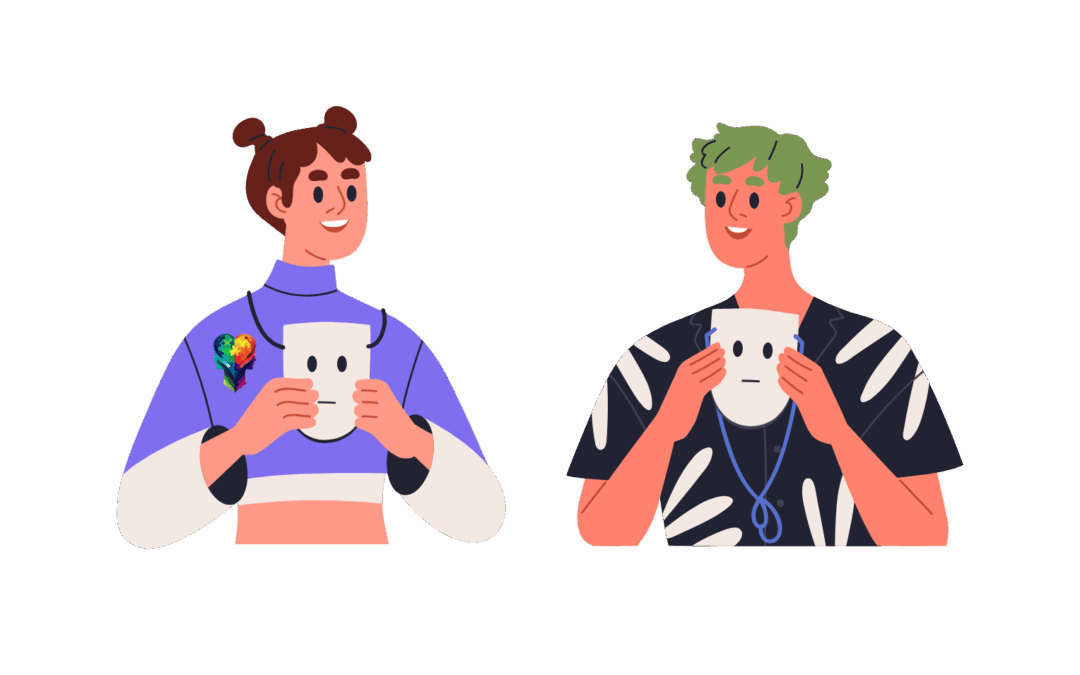
Masking in neurodiverse relationships, it’s like a quiet exhaustion many neurodivergent partners carry—one that doesn’t always show on the outside. They laugh at the right times, nod at the right moments, and say what they think their partner wants to hear. To anyone watching, it looks like they’re “fine.” This is their external presentation. But inside, they’re running a marathon just to keep up, often feeling overwhelmed by the pressure to meet their neurotypical partner’s expectations. The motivations for masking include a desire for social acceptance, avoidance of stigma and bullying, or improvement in job or school performance. In relationships involving neurotypical partners, this dynamic can create unique challenges and misunderstandings.
This is autism masking in relationships, masking. And in intimate relationships, neurodivergent masking can be both a survival strategy and a silent wedge. Masking often involves hiding certain autistic traits to appear more acceptable or to avoid judgment.
For the partner on the other side, masking often feels confusing. “Why didn’t you just tell me you were overwhelmed?” they ask, especially if they are a non autistic partner . Or, “How could I know you were hurting if you never said anything?” The answer isn’t simple for autistic adults navigating their emotions. Masking isn’t lying—it’s protecting. It’s performing “normal” when your nervous system is screaming for rest, and it takes a tremendous amount of mental energy to maintain. This internal struggle can lead to feeling overwhelmed, especially when sensory overload or emotional strain builds up. Unmasking can sometimes exhibit as irritability or withdrawal in autistic individuals, especially after a long day of social interactions.
In this blog post, I’ll walk you through what masking looks like inside neurodiverse relationships, why it takes such a heavy toll, and how both partners can begin to step into healing, authenticity, and emotional expression together.
3 Key Takeaways
- Masking is not dishonesty—it’s a survival strategy that helps neurodivergent partners feel safer but often leaves them drained and disconnected.
- In relationships, masking hides authentic needs and creates cycles of misunderstanding, resentment, and burnout.
- Healing requires courage on both sides: the neurodivergent partner unmasking in safe ways, and the other partner learning to meet that authenticity with compassion and steadiness. Couples may benefit from seeking autism couples therapy to support this process.
What Is Autistic Masking, Really?
Masking refers to the act of camouflaging one’s natural responses, needs, or expressions to appear more “acceptable” or “normal” in social situations, particularly those with autism spectrum conditions (also known as autism spectrum disorder, or ASD).
Neurodivergent masking often involves suppressing or altering natural behaviors, including body language, communication styles, and even dress sense, to fit in with societal expectations, often suppressing their sensory needs and neurodivergent traits.
For autistic individuals, it might mean forcing eye contact, rehearsing phrases before speaking, mimicking facial expressions, or adjusting body language and dress sense to blend in. Many people with autism spectrum disorder experience difficulty interpreting or responding to nonverbal cues, such as gestures and facial expressions, which can make social interactions more challenging for autistic people . For someone with ADHD, it could look like suppressing restlessness, hyperactivity, or big emotions in order to appear “balanced.”
In romantic relationships, masking often shows up as a barrier to physical intimacy : Autistic individuals may experience alexithymia, making it difficult to express or identify emotions, which affects intimacy.
- Smiling or agreeing when you’re actually confused or overstimulated.
- Saying “yes” to intimacy when your body is saying “no.”
- Pretending to follow a conversation when your brain has thoroughly checked out.
- Over-functioning in social settings to cover up the fear of being judged as “rude” or “awkward.”
- Modifying body language, communication styles, or dress sense to avoid standing out.
Because masking can hide true feelings and needs, clear communication becomes especially important in romantic relationships to express each partner’s own needs to reduce misunderstandings and foster genuine connection.
At first, masking may seem harmless—even helpful. But over time, it erodes intimacy, because what your partner sees isn’t the real you.
Signs of Masking
Recognizing the signs of masking is a crucial step in supporting autistic individuals and understanding the hidden struggles they may face. Masking often involves suppressing or disguising autistic traits to blend in during social interactions, particularly for the autistic partner . Some common signs include difficulty with eye contact—where an autistic person may force themselves to look others in the eye, even if it feels uncomfortable or unnatural. You might also notice exaggerated or practiced facial expressions, as autistic individuals try to match the emotional cues expected by non-autistic people.
Scripted conversations are another hallmark of masking. Instead of responding spontaneously, autistic individuals may rehearse what to say in advance, or rely on memorized phrases to navigate social situations and share their special interests . This can make interactions feel stiff or overly formal. After these efforts, many autistic people experience social exhaustion, needing significant alone time to recover from the mental and emotional energy spent maintaining the mask, especially without appropriate support.
The impact of masking goes beyond the moment—it can lead to serious mental health difficulties, such as anxiety, depression, and even autistic burnout. The constant pressure to appear “normal” can also result in physical symptoms, such as headaches or stomach aches, due to the stress of masking. These negative consequences for well-being make it essential for partners, friends, and family to recognize these signs and offer understanding and support. Masking can affect many aspects of an autistic person’s life, not just social interactions, influencing daily routines, stability, and overall quality of life.
The Hidden Mental Health Cost of Masking in Love
Masking is exhausting. Many neurodivergent partners describe it as living in costume, even at home, which can contribute to autistic burnout, especially after social events .
Take James, a client I worked with. James, one of many autistic men, was married to Rachel and spent most of their early marriage “acting normal” to meet her expectations. These efforts were examples of autistic masking—he forced small talk after work, even when he was sensory-overloaded, and agreed to dinner parties that left him depleted for days. These were also autistic behaviors shaped by his attempts to fit in. He never told Rachel how painful eye contact was for him because he didn’t want to disappoint her.
On the outside, James looked like the perfect partner: agreeable, cooperative, always “on.” But inside, he was crumbling. The more he masked, the more disconnected he felt—not just from Rachel, but from himself.
Rachel, on the other hand, was confused and hurt. “If you never told me how hard it was,” she said in therapy, “how could I know? I thought you wanted those things.” This highlights the importance of understanding the partner’s perspective in neurodivergent relationships, enabling both partners to understand autism and develop empathy and insight into each other’s experiences. A partner might misinterpret masking behaviors as genuine preferences or enthusiasm, not realizing they stem from the autistic partner’s efforts to cope with burnout or sensory overload.
This is the heartbreaking paradox of masking: it protects the neurodivergent partner from rejection, but it also prevents the relationship from building the safety needed for true intimacy. Building a supportive relationship requires both partners to foster mutual understanding, acceptance, and open communication as keys to healing. Understanding the unique needs of autistic individuals can help neurotypical partners provide better support during moments of sensory overload or burnout.
The Experience of Autistic People
For many autistic people, daily life is shaped by unique sensory sensitivities and differences in social interaction. Navigating a world built around neurotypical expectations often means feeling out of sync due to developmental disorders, and masking becomes a coping mechanism to avoid standing out. But this comes at a cost: the more an autistic individual hides their authentic selves, the more disconnected they may feel from their true self, especially for the autistic person. Creating a predictable environment helps autistic individuals feel secure and reduces anxiety in relationships.
Many autistic individuals describe masking as “putting on a show” or pretending to be someone they’re not, just to fit in. This constant performance can lead to profound exhaustion, as it requires immense emotional resources to monitor every gesture, word, and reaction. The emotional toll of masking is significant, often resulting in feelings of isolation, anxiety, and a sense of being misunderstood. Despite these challenges, autistic individuals bring a unique perspective to relationships, enriching connections with their distinct ways of experiencing and expressing love.
What autistic people need most is acceptance—a supportive environment where they can express their autistic traits without fear of judgment. Promoting self-acceptance and valuing authentic self-expression helps autistic individuals feel seen and respected for who they truly are. It is equally important for society to embrace neurodiversity, fostering understanding and acceptance of different ways of being. When society, families, and partners create space for genuine connection, autistic individuals can begin to reclaim their energy and well-being, living more fully as their authentic selves. Through this process, self discovery becomes a positive and empowering outcome, allowing individuals to better understand and celebrate their identity.
Why Masking Happens in Relationships: The Role of Societal Expectations
Masking doesn’t appear out of nowhere. It’s usually built over years of experience. Many neurodivergent adults develop masking as a response to external pressures, such as societal expectations and stigma, often starting from a young age, especially for non autistic individuals .
- Childhood lessons: Many neurodivergent individuals, especially those with developmental disorders and other mental disorders, learn at a young age that being themselves leads to teasing, criticism, or exclusion (as classified in the Diagnostic and Statistical Manual).
- Social survival: At work, with friends, or in public, masking helps avoid conflict and “fit in.”
- Fear of loss: In intimate relationships, masking often comes from fear—If my partner really knew how different I am, they wouldn’t stay.
These fears are deeply human. But when brought into a romantic bond, they create a relationship where one partner is always holding back, and the other is always missing the full picture.
Receiving an autism diagnosis can be a turning point, helping individuals understand their masking behaviors (especially as explored in women and autism) and begin to unmask in relationships.
How Masking Impacts the Non-Masking Partner
It’s easy to assume masking only hurts the neurodivergent partner, but the impact is relational. Often, the non-masking partner may be a neurotypical partner, and their experience is equally important.
- The neurotypical partner often feels blindsided when the mask eventually slips: “Why didn’t you just tell me?”
- They may interpret masking as dishonesty: “I thought we were connecting, but now I learn you were pretending.”
- The neurotypical partner’s need for clear communication and emotional safety may lead them to overcompensate—reading into every silence or micro-expression, trying to guess what’s real and what’s not.
This breeds cycles of mistrust. Not because either partner is malicious, but because the foundation of authenticity has cracks. Recognizing different communication preferences and fostering mutual respect are essential for building a deeper understanding between partners. Healing requires effort from one or both partners to rebuild trust and adapt to each other’s needs.
Masking at Work—and Why It Follows You Home
One of the most overlooked aspects of masking is how much of it happens outside the relationship—especially at work.
Many neurodivergent professionals spend their entire day masking to succeed in the neurotypical world, which is not built for their brains.
At work, these coping mechanisms help neurodivergent individuals navigate the neurotypical world and can include:
- Holding back stims or movements to appear “professional.”
- Forcing eye contact in meetings, even when it’s draining.
- Mimicking social behaviors in the office to avoid judgment.
- Over-preparing or double-checking emails, presentations, or conversations out of fear of seeming incompetent.
Certain environments, such as open-plan offices or noisy workplaces, can be especially challenging for neurodivergent individuals due to sensory sensitivities and overstimulation.
While these coping mechanisms often “work” in terms of career success, they come with a steep cost: by the time the neurodivergent partner comes home, their emotional tank is empty. Prolonged masking can also increase the risk of developing mental health issues, such as anxiety, depression, suicidal ideation or burnout. Social events can also be a significant source of stress and exhaustion, especially after a long day of masking.
This can leave the romantic partner wondering: “Why do they have energy for everyone else but me?” The truth is often the opposite: the workplace drained them so much that home becomes the only safe place to collapse. Neurotypical partners may struggle to understand the reasons behind their autistic partner’s withdrawal or disengagement during or after social events. Autistic partners may require quiet times or seclusion to recover from social overstimulation, which is often misunderstood by neurotypical partners.
Healing requires both partners to understand this spillover. It’s not about valuing work over love—it’s about the reality that masking burns through energy reserves faster than most people realize. Establishing a ‘decompression’ routine at home is important for autistic individuals to recover after masking.
The Effects of Autistic Burnout
Autistic burnout is something I want you to really understand – it’s this profound state of complete exhaustion that happens when you’ve been masking your beautiful autistic traits for way too long! Unlike just feeling tired, this burnout comes from constantly using all your energy to navigate social situations, manage those overwhelming sensory experiences, and try to fit into a world that often feels impossible to keep up with. I see this so often with my clients, and I want you to know that what you’re experiencing is completely real and valid!
For you as an autistic person, the effort it takes to hold back your natural responses and show up as “socially acceptable” – that can drain everything you’ve got! Over time, this constant pressure can lead to what feels like a complete collapse – where even the simplest daily tasks feel impossible, and connecting with others becomes so much harder. You might notice extreme fatigue, anxiety or depression getting stronger, your sensory sensitivities feeling more intense, or losing interest in things that used to bring you joy. This isn’t your fault – it’s your system telling you it needs care!
The ripple effects of autistic burnout touch every part of your life, and I want you to know that’s completely understandable! Your relationships might feel strained as you find yourself withdrawing or struggling to keep up with shared routines. Work and personal responsibilities can feel overwhelming, leading to those painful feelings of failure or isolation. Most importantly, burnout can really impact your self-esteem and make it even harder to speak up for what you need – but you deserve support and understanding!
Recognizing these signs is so important for both you and the people who care about you! I need you to understand that burnout isn’t a personal failing – it’s your body and mind responding to chronic stress and unmet needs. When your loved ones can offer you compassion and real support, when you can create space for rest, reduce those demands, and honor your authentic self – that’s where healing begins! As those pressures of masking and trying to meet impossible expectations start to ease, you can begin to heal, rebuild your mental health, and reconnect with who you truly are. You deserve this care and support!
Navigating Social Situations
Social situations can be especially challenging for autistic individuals, particularly when masking is involved. Many autistic people feel as though they must constantly monitor their behavior, second-guessing every word and gesture to meet external expectations, especially in response to sensory input. Sensory overload is a common experience, where excessive stimuli can overwhelm the sensory system and lead to distress or the need to withdraw. Some autistic individuals may also be over sensitive to sensory input, reacting intensely to things like touch, sound, or light. This hyper-vigilance can make social interactions feel like a high-stakes performance, leading to anxiety, self-doubt, and a sense of disconnection from their true selves.
Masking in social situations often means prioritizing what others expect over one’s own comfort or preferences. This can make it difficult for autistic individuals to form meaningful relationships, as they may worry that others only know the “masked” version of themselves. The result is a cycle where genuine self-expression feels risky, and authentic connection remains out of reach.
Creating a more supportive environment starts with open communication and understanding. When friends, family, and partners encourage honest conversations about needs and boundaries, autistic individuals are more likely to feel safe being themselves and their partner’s authentic self. Establishing a safe space, where neurodivergent people feel secure and free from judgment, is essential for authentic expression. By fostering spaces where neurodivergent people can drop the mask, we pave the way for deeper, more meaningful relationships built on trust and acceptance.
Steps Toward Healing
Step 1: Create a Culture of Permission
Unmasking requires safety. The neurodivergent partner needs to hear—often repeatedly—It’s okay to be real with me. You don’t have to perform here.
For example:
- “You don’t have to force eye contact with me. I care more about hearing your words than how you look at me.”
- “If you need silence instead of conversation right now, I can honor that.”
Normalizing stimming can create a genuinely safe space for autistic individuals at home.
These small reassurances build a culture where authenticity feels less dangerous. Many autistic individuals communicate in a direct and honest manner, which can differ from the indirect communication styles of neurotypical individuals.
Step 2: Practice Micro-Unmasking
Unmasking all at once can feel terrifying. Instead, I often guide clients to experiment with “micro-unmasking”: small, intentional steps toward honesty.
Examples:
- Saying, “I’m actually too tired to talk right now” instead of forcing conversation.
- Admitting, “That party overwhelmed me more than I expected.”
- Sharing one vulnerable thought per day, no matter how small.
These little moments of truth accumulate, creating a bridge of trust.
Step 3: For the Partner—Respond With Steadiness, Not Shock
When your neurodivergent partner unmasks, resist the urge to overreact. If they say, “I’ve actually hated going to those dinners,” your instinct may be to feel hurt or betrayed. However, the goal is not to blame—it’s to build safety.
Instead of, “Why didn’t you tell me sooner?” try: “Thank you for telling me. I’d rather know the truth now than never.”
Your calm, steady response becomes the oxygen that makes more unmasking possible.
Step 4: Build New Relational Rhythms Together to Support Authentic Selves
Healing from masking isn’t just about dropping the disguise—it’s about building a healthy relationship where both partners’ needs are honored.
That may mean:
- Agree on shorter social commitments.
- Allow for decompression time after work before engaging in conversation.
- Replace forced conversations with alternative ways of connecting (texting, voice notes, shared activities).
- Open communication about sensory sensitivities is crucial when planning dates or shared activities.
The goal isn’t to erase differences—it’s to design a rhythm of love that both nervous systems can sustain.
Self-Care and Emotional Well-being
Prioritizing self-care is essential for autistic individuals, especially when it comes to managing the emotional toll of masking. The effort required to maintain a facade in social situations can quickly deplete emotional resources, leading to stress, anxiety, and other mental health challenges. Engaging in activities that promote relaxation and self-expression—such as exercise, creative hobbies, or spending time in nature—can help restore balance and support overall well-being.
Seeking support from mental health professionals or joining support groups can also be invaluable. Therapy can play a key role in fostering empathy between partners and family members, helping to build mutual understanding and emotional connection. Additionally, therapy often focuses on improving communication skills, which is especially important for navigating relationship dynamics and supporting neurodiverse couples. These safe spaces allow autistic people to process their experiences, share coping strategies, and connect with others who understand the unique challenges of masking. By focusing on emotional well-being and self-acceptance, autistic individuals can begin to counteract the negative consequences of masking and nurture a more authentic sense of self.
It’s important to remember that masking is not just a personal issue, but a reflection of societal expectations. Open conversations about individual needs and communication styles are vital for emotional well-being and building strong, supportive relationships. Building a more inclusive and accepting world—one that values autistic individuals for who they are—reduces the need for masking and supports everyone’s mental health. When we champion authentic self-expression and create environments where neurodivergent people can thrive, we all benefit from richer, more genuine connections.
A Story of Transformation
James and Rachel’s breakthrough came when James, for the first time, told Rachel: “I’ve been pretending for years because I was afraid you’d leave if you saw the real me.”
Rachel wept, not out of anger, but out of relief. For the first time, she finally saw him
From that day forward, they practiced “micro-unmasking.” James started admitting when he was overstimulated and began expressing his sensory needs, helping Rachel understand what made him comfortable or uncomfortable. He also started sharing his special interests with Rachel, inviting her into the passions that brought him joy. Rachel practiced responding with gratitude instead of hurt. Slowly, their marriage shifted from performance to presence. This shift meant James was moving away from identity management—suppressing parts of himself to fit in—and toward self-advocacy, openly expressing his needs and embracing his authentic self.
It wasn’t perfect—James still masked at work, and Rachel still had moments of loneliness. But at home, they were building something far more precious than perfection: honesty and genuine acceptance.
If this story resonates with you, I invite you to book a FREE “Clarity & Connection” Zoom Session with me. Together, we’ll explore how masking is showing up in your relationship and what healing could look like.
Final Thoughts
Masking in neurodiverse relationships is not a sign of selfishness, dishonesty, or rejection; rather, it is a common coping mechanism that many individuals use to manage their emotions. For an autistic partner, masking can be especially challenging, as it often involves suppressing natural responses to accommodate neurotypical expectations. It is a survival strategy—one that makes sense given a lifetime of pressures to “fit in.” However, failing to address masking can lead to adverse outcomes, as masking is inherently tied to one’s sense of self and well-being, serving as a protective mechanism. But survival isn’t the same as intimacy.
Healing begins when both partners recognize masking for what it is and commit to creating a relationship where masks are no longer necessary. In a romantic relationship, authenticity is crucial for building trust and genuine connection. It requires patience, compassion, and the courage to let the real self step forward.
Because love doesn’t thrive in performance. It thrives in truth (note: while terms like “high-functioning autism” are commonly used, they are not official diagnoses in the Diagnostic and Statistical Manual of Mental Disorders, which is the standard classification tool for mental health conditions. See our disclaimer).
Frequently Asked Questions
Is masking the same as lying?
No. Masking is not about deception—it’s about survival. The nervous system attempts to maintain safety, even if it means concealing true feelings.
How do I know if I’m masking in neurodiverse relationships?
If you often feel drained after interactions with your partner, or if you notice yourself saying or doing things to “keep the peace” rather than from a genuine place, you may be masking.
What should I do if my partner feels hurt when I unmask?
This is common. The key is communication. Let them know your unmasking isn’t a rejection of them—it’s a step toward deeper connection. Please encourage them to share their feelings too, while holding firm to your need for authenticity.
Can relationships survive if masking has gone on for years?
Yes. I’ve seen couples rebuild even after decades of masked dynamics. It requires honesty, patience, and often professional support—but healing is absolutely possible.