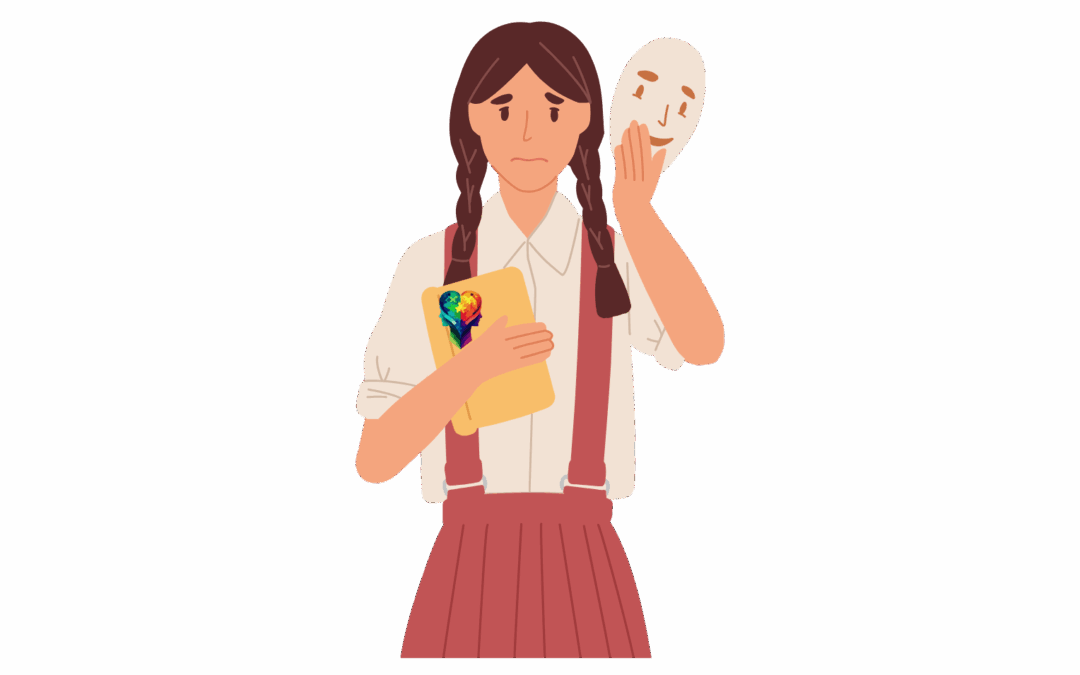
If you’ve ever collapsed at the end of the day, wondering why you’re so exhausted when “nothing big happened,” you’re not imagining it. For many neurodivergent adults, the real culprit isn’t work deadlines or errands—it’s neurodivergent masking that is often linked to developmental disorders.
Masking is the act of camouflaging your natural expressions, needs, or behaviors to blend in with a neurotypical world. And while it may keep you “safe” in the moment, the long-term cost is profound: bone-deep exhaustion, a frayed sense of self, and a constant pressure that feels like living with a weighted blanket you never chose – a concern shared by the neurodivergent community. Many people develop coping mechanisms to manage the emotional and physical toll of masking, but these coping mechanisms can be both helpful and harmful. Over time, masking can lead to adverse outcomes, including mental health difficulties, burnout, and other adverse effects.
In this blog post, we’ll unpack what neurodivergent masking really is for Autism and ADHD, too, why it drains you so completely, especially when trying to navigate social skills, and how to begin reclaiming your energy and authenticity.
3 Key Takeaways
- Neurodivergent masking is survival, not failure. It often develops as a way to avoid judgment or rejection.
- The exhaustion is absolute. Pretending to be “normal” burns enormous cognitive, emotional, and sensory energy.
- Freedom comes with awareness. You can learn to unmask safely and restore energy without losing connection.
What Is Neurodivergent Masking and Autistic Masking, Really?
Neurodivergent masking isn’t just faking a smile. It’s suppressing stims, forcing eye contact, mimicking speech patterns, or rehearsing conversations in advance. These are examples of autistic behaviors that are often masked. Masking is the act of camouflaging your natural expressions, needs, or behaviors to blend in with a neurotypical world. Autistic masking refers to the conscious or unconscious suppression of autistic behaviors by autistic people to appear more neurotypical. Neurodivergent people mask to fit in, avoid discrimination or harassment, and cope with social or workplace challenges related to neurodivergence, including their autistic traits.
For many autistic and ADHD people, masking starts in childhood—when being “too much” or “too different” drew punishment, teasing, or exclusion. For many, autistic masking begins at a young age as a coping strategy in response to external pressures to appear socially acceptable, often influenced by individual developmental trajectories. Research and support should consider the diverse experiences of every autistic person, including those with different identities and support needs. Over time, it becomes second nature. You don’t even notice you’re doing it until you collapse later and wonder why you can’t keep up like everyone else.
The Bone-Deep Tiredness and Cognitive and Emotional Energy of Masking
The fatigue from neurodivergent masking is not just “being tired.” It’s depletion at every level:
- Cognitive exhaustion from monitoring yourself and others constantly.
- Emotional exhaustion from hiding frustration, overwhelm, or confusion.
- Physical exhaustion from tensing your body to look “normal” and suppress natural rhythms.
Masking is often used as a coping mechanism to manage social situations, but it involves many aspects that can lead to negative consequences for both mental and physical health. Masking can contribute to mental health difficulties such as stress, anxiety, and burnout. Research shows that masking can prevent neurodivergent individuals from forming genuine social connections, as the effort to suppress their natural traits can create barriers to authentic interactions, especially among neurodivergent colleagues.
This is why so many neurodivergent adults describe feeling “bone-tired.” The weariness lives in your muscles, your skin, your very sense of being. These experiences can lead to or exacerbate mental health issues for neurodivergent individuals.
The Physical Toll of Neurodivergent Masking
For so many autistic adults and neurodivergent people like you, masking doesn’t just tire out your mind—it really takes a toll on your whole body! When you spend hours holding back your natural autistic traits and copying neurotypical behaviors, your body truly feels that strain. You might notice headaches, muscle tension, and those unexplained aches that seem to appear, all because of the incredible amount of mental and emotional energy it takes to maintain that mask. I want you to know that what you’re experiencing is real and completely valid!
Within our autistic community, more and more people are recognizing just how much masking can impact their physical well-being! Many autistic individuals share that they experience autistic burnout—this deep state of physical, mental, and emotional exhaustion that comes from constantly working to hide their autistic characteristics and meet those social expectations. This isn’t just about “feeling tired”—it’s a complete body shutdown that can take weeks or even months for you to recover from. You deserve to understand that this is a genuine experience that affects many of us.
Research shows us that when you mask frequently, you’re at higher risk for mental health challenges like depression, anxiety, and even thoughts of suicide. These mental health struggles can actually make your physical symptoms worse, creating this cycle that feels really hard to break! The constant pressure to engage in masking behaviors doesn’t just drain your energy—it can erode your sense of who you truly are, leading to outcomes that impact your overall well-being, including contributing to low self-esteem. I want you to know that recognizing this pattern is a significant step forward.
The physical toll of masking is such a powerful reminder that supporting neurodivergent people like you means way more than just tolerating differences—it means actively encouraging your authentic self and making real space for your natural autistic traits! When we move away from demanding conformity and instead create genuine acceptance, we help reduce the emotional and physical burden of masking. By working together on this project, we create a world where you and other autistic individuals can truly thrive, not just survive. You deserve nothing less than that kind of support and understanding! If neurodivergent masking is leaving you bone-tired and disconnected, you don’t have to carry the weight alone. Book a FREE Clarity & Connection Zoom Call today—we’ll explore how to create safety for your authentic self and discuss concepts like adaptive morphing in your relationships and daily life.
The Role of Eye Contact in Masking
Eye contact gets talked about like it’s this magical key to “good” social connection, but here’s what I want you to know – for so many amazing autistic adults and neurodivergent people, it’s actually one of the most challenging and draining parts of trying to fit in, often influenced by real or anticipated reactions. While others might not even think twice about eye contact, autistic individuals usually find it uncomfortable, overwhelming, or even physically painful. Yet because our world keeps insisting that eye contact means you’re interested and engaged, so many autistic people feel this heavy pressure to force eye contact to belong – and that breaks my heart!
Forcing eye contact isn’t some tiny tweak you can make – it’s this massive drain on your precious mental and emotional energy! I’ve heard from countless autistic adults who describe feeling anxious, tense, and completely disconnected from who they really are when they’re putting on this eye contact performance. This constant effort to appear “normal” creates such harmful ripple effects for mental health – increased stress, anxiety, and that devastating autistic burnout that leaves you feeling so depleted. All that emotional energy spent monitoring eye contact, plus juggling facial expressions and body language – it leaves autistic individuals feeling exhausted and so far from their authentic, beautiful selves!
The autistic community has been sharing this powerful wisdom for years, celebrating and accepting autistic traits, including these natural differences in eye contact and self-expression. When autistic people have the opportunity to interact in ways that truly feel comfortable and genuine – whether that means looking away, staying quiet, or expressing themselves in their own unique ways – something amazing happens. They experience better well-being and this stronger, more grounded sense of who they really are! Creating quiet spaces and environments that truly respect communication differences makes a meaningful difference, reducing the need to mask and supporting genuinely better mental health outcomes, which can be crucial for those who struggle to maintain friendships.
What’s so heartbreaking is how these negative stereotypes and misunderstandings about autistic behaviors keep showing up, creating all this external pressure for autistic individuals to squeeze themselves into neurotypical boxes! This doesn’t just reinforce those exhausting masking behaviors – it actually undermines that beautiful, true sense of identity and belonging that neurodivergent people deserve. By gently educating others about autistic experiences and why accepting autistic ways of connecting matters so much, we can start dismantling these harmful expectations together!
Research continues to explore how eye contact masking affects people, but here’s what feels crystal clear to me: truly supporting autistic individuals means celebrating their natural expressions and creating genuine space for authentic social connections. By promoting awareness, acceptance, and honoring the incredible strengths that come with neurodivergent traits, we can help mitigate the harmful effects of masking and build a more inclusive, deeply supportive world where everyone feels a sense of belonging exactly as they are.
A Story from the Therapy Room
One client, whom I’ll call Ethan, was a successful engineer and a neurodivergent person. Every day, he spent hours in meetings, carefully managing his facial expressions and tones so he wouldn’t be labeled “rude” or “too blunt.” He memorized jokes and small talk topics for the break room. He even kept a notebook of “safe answers” for social questions.
By the time he got home, Ethan had nothing left to give his wife. She felt shut out; he felt like he was drowning. He said to me once, “I’m not tired from my job. I’m tired of pretending I’m not autistic while doing my job.” This constant identity management made it difficult for Ethan to connect with his true self and maintain a true sense of who he was, as masking often obscured his authentic identity.
Once Ethan began recognizing his neurodivergent masking patterns, he started experimenting with small moments of unmasking—letting himself stim in meetings, asking for written agendas, or simply saying, “I need a break.” Over time, the bone-deep exhaustion lessened. His energy wasn’t endless, but it was finally his own.
Why Masking Feels So Necessary
It’s essential to acknowledge that neurodivergent masking often begins as a brilliant survival strategy. It helps you navigate school, work, and relationships in a world not built for your wiring. Masking is standard across different groups of neurodivergent people, and negative stereotypes about autism and neurodiversity often reinforce the need to mask, particularly among those who have been diagnosed with autism. For many women and AFAB folks with ADHD or autism, masking even delayed their diagnosis—because they looked “high-functioning” from the outside. Recent autism research shows that masking can significantly delay autism diagnosis and influence self-perception, making it harder for individuals to understand and accept their authentic selves.
Workplaces and schools can better support neurodivergent employees and young people by creating inclusive environments, providing training on neurodiversity, and offering sensory-friendly accommodations to help reduce stigma and encourage self-advocacy, particularly for neurodivergent children.
But survival strategies eventually take a toll. Masking keeps you safe, but it also keeps you disconnected—from your body, your needs, and sometimes even your relationships.
4 Ways to Begin Unmasking Safely
1. Notice Your Mask
Could you start by tracking when and where you mask? Research using online surveys has shown that neurodivergent individuals often mask their differences in various social interactions, ranging from work to family gatherings. Is it at work? With family? At social events? Simply naming it gives you back a sense of choice.
2. Practice Micro-Unmasking
You don’t have to “rip off the mask” all at once. Try unmasking in small, safe ways: allow yourself to fidget, wear clothes that actually feel good, or tell a trusted friend when you’re overwhelmed.
For some, micro-unmasking involves expressing their true sense of style, rather than conforming to external expectations. Autistic teenagers, in particular, are increasingly embracing these authentic choices as part of self-acceptance, often informed by tools like the camouflaging autistic traits questionnaire.
3. Build Recovery Rituals
Even if masking is still necessary, you can schedule intentional decompression afterward—such as quiet time, sensory comfort, or movement. Recovery rituals can help counteract the effects of sensory suppression that often occur during masking. This replenishes what masking drains.
4. Seek Environments That Welcome Your Authentic Self
Whether it’s a support group, ND-friendly workplace, or therapy space, surrounding yourself with people who “get it” allows you to rest from the pressure of performing. Educating neurotypical people about masking and including autistic men in support groups is essential to ensure diverse perspectives and foster an accurate understanding.
Support environments should also recognize other forms of masking and identity management beyond just autistic masking.
Summary
Neurodivergent masking is a survival skill, not a weakness. However, the hidden cost is bone-deep exhaustion that no amount of coffee, sleep, or willpower can erase, as it is deeply tied to your brain function. Recognizing when and why you mask is the first step toward reclaiming your energy and authenticity.
You are not broken for feeling tired. You are carrying the weight of a world that wasn’t designed for you. And with compassion, awareness, and safe places to unmask, you can finally feel the relief of resting as your authentic self. This is also an opportunity to reconnect with your true self after years of masking and disconnection.
FAQs
What is neurodivergent masking?
It’s the act of camouflaging or suppressing natural neurodivergent traits (like stimming, direct communication, or sensory needs) to fit into neurotypical expectations.
Is neurodivergent masking the same as people-pleasing?
Not exactly. People-pleasing often stems from a desire to maintain relationships, whereas neurodivergent masking is more about camouflaging traits for safety. The two can overlap.
Can neurodivergent masking cause burnout in autistic adults?
Absolutely. Long-term masking is one of the leading contributors to ND burnout, which shows up as shutdowns, meltdowns, or complete withdrawal from responsibilities.
How can I explain neurodivergent masking to my partner?
Try describing it as “acting in a play all day, every day.” Partners often understand once they realize it’s not about hiding from them—it’s about surviving in a demanding world.