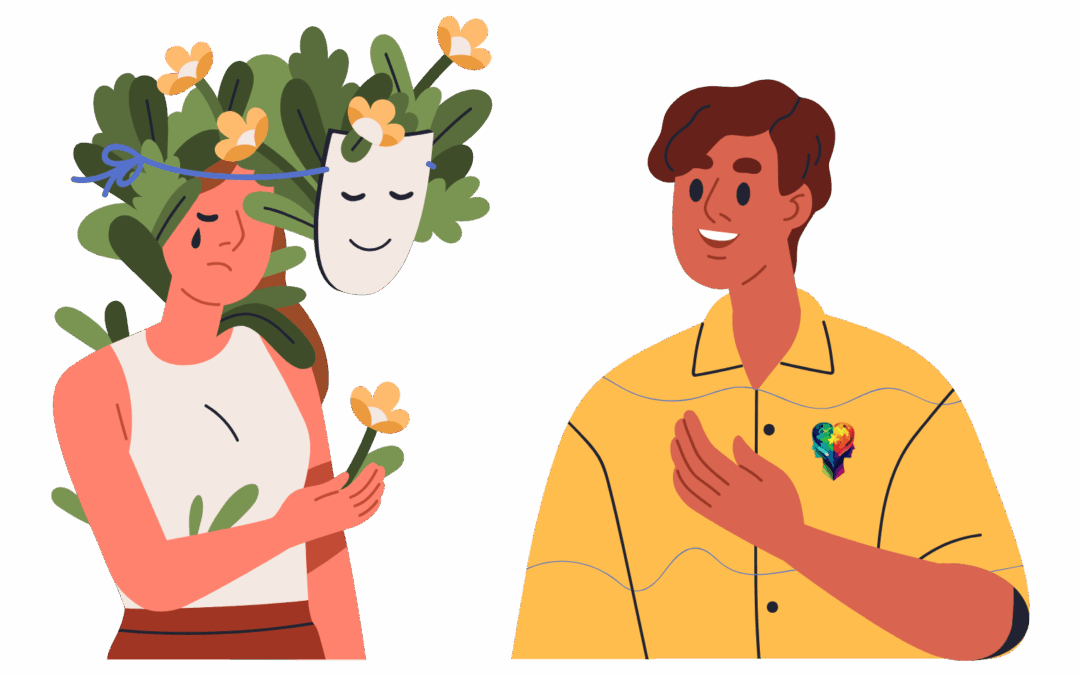
Are you living as a highly masked adult with autism or ADHD? There’s a particular exhaustion that comes from holding yourself together every day isn’t there? Smiling when you’re unraveling inside. Saying yes when your whole body is screaming no. Reading the room so well that no one ever notices you’re fading.
If you’ve been masking your way through life, you already know the cost: burnout, loneliness, and the hollow ache of not quite knowing who you are anymore. Chronic stress is a typical result of prolonged masking, and it significantly contributes to the health challenges faced by highly masked adult with autism or ADHD.
I want to offer you something steadier than advice. A framework. A way back to yourself when the world feels too demanding and your nervous system is stretched thin.
In this blog post, I’ll share the three pillars of living as a masked adult with autism or ADHD They are not quick fixes. They’re anchors—practices that help you step out of survival mode and into authentic connection with yourself and others.
3 Key Takeaways
- Respect is your baseline—it starts with how you treat yourself.
- Rest is not optional; it’s your nervous system’s language of survival.
- Realness—your honesty, intensity, and complexity—is not a flaw but your freedom.
Pillar 1: Respect
Respect begins with you.
For many highly masked autistic and ADHD adults, there’s a hidden bargain: “If I work hard enough to be easy, likable, and low-maintenance, maybe people will finally understand me.” These individuals are part of marginalized groups who often face misunderstanding, social stigma, and a lack of support from society.
But here’s the truth—most people may never fully understand your inner world. That’s not your failure. That’s just reality. Respect and understanding are not the same. And while understanding may be optional, respect is not.
The first pillar is about treating yourself as someone worthy of respect, even before the world catches up.
How Respect Shows Up in Daily Life:
- Boundaries: Saying no to one more meeting, project, or favor when your energy is already depleted.
- Self-talk: Replacing “Why am I like this?” with “What do I need right now?”
- Advocacy: Naming your needs without apology (“I process best with clear instructions.”).
Respect is contagious. When you start honoring your own boundaries, others learn how to treat you. And if they don’t? That tells you something important, too.
Pillar 2: Rest
Masking is one of the fastest routes to burnout. Autistic burnout is a recognized phenomenon that results from prolonged masking and lack of rest, leading to profound exhaustion and significant challenges in mental health and daily functioning. It demands constant vigilance—watching your tone, your body language, your words—until your nervous system collapses under the weight of performance.
Rest, then, is not optional. It’s the second pillar, and it’s your nervous system’s love language.
But let’s be clear: rest is not only about sleep. It’s about repair. It’s about building intentional pauses into a life that constantly demands more.
Small but Radical Acts of Rest:
- Turning off your camera in a Zoom call.
- Stepping outside when the party noise is too much.
- Creating a daily “no access” window where no one gets your attention.
- Letting a task go undone without punishment.
A client once described rest to me as “permission to collapse.” But real rest isn’t collapse. Collapse is what happens when you push until your body takes over. Rest is proactive. It’s choosing to step back before your body forces you.
No one else can do this for you. Rest is an act of self-respect that only you can claim.
Pillar 3: Realness
Here’s where courage comes in.
The third pillar—realness—is the invitation to stop living entirely behind the mask. Each person develops their own masking strategies based on personal experiences, cultural background, and context. It doesn’t mean ripping it off in every setting; safety matters. But it does mean choosing places, people, and moments where you let your authentic self be seen.
Realness is not always comfortable. Your honesty might unsettle others. Your intensity might be called “too much.” Your quirks might be misunderstood. But none of those things make you wrong.
Living in Your Realness Looks Like:
- Saying “I’m overstimulated” instead of defaulting to anger or withdrawal.
- Letting yourself leave the room when your body says “enough.”
- Stopping the endless apologizing for who you are.
- Choosing to share your truth—even when it isn’t received perfectly.
Realness is how connection grows. Yes, you may lose some people when you stop performing. But the ones who stay—the ones who lean in—are the relationships that will finally feel safe enough to breathe in.
Building a Support Network for Autistic or ADHD Masked Adults
Navigating everyday life as an autistic or ADHD person can feel absolutely overwhelming – especially when sensory sensitivities and social expectations pile up in ways that feel so heavy! That’s why building a support network is deeply vital for autistic individuals – it’s not just about having people to lean on, but about creating this amazing circle where you can be fully seen and genuinely accepted for who you are!
A strong support network might include family, friends, therapists, or even online communities that truly understand. Connecting with others who truly understand the unique challenges of the autism spectrum can make such a meaningful difference in your life. Whether it’s a local support group, a virtual forum, or a trusted friend who completely “gets it” – these connections help reduce that sense of isolation and foster real self-acceptance in the most beautiful ways!
Online spaces, in particular, can be a lifeline for many people. Many autistic adults find genuine comfort and amazing camaraderie in forums and social media groups dedicated to sharing experiences, tips, and heartfelt encouragement. These communities offer this safe, welcoming place to talk openly about sensory sensitivities, mental health, and all the ups and downs of everyday life – without any fear of judgment or having to mask who you really are!
Don’t overlook professional support, either – it can be truly transformative! Many organizations offer counseling, advocacy, and recreational activities specially tailored for autistic people in ways that feel authentic and supportive. These incredible resources can help you develop meaningful coping strategies, build genuine confidence, and improve your overall mental health in such powerful ways! Book a FREE “Clarity & Connection” Zoom Call with me today. Together, we’ll explore how you can build more respect, rest, and realness into your daily life and relationships.
Surrounding yourself with a supportive network isn’t just about getting help – it’s about building this solid foundation for self-acceptance, resilience, and creating a more fulfilling life that honors exactly who you are! This approach is all about being seen, respected, and gently supported as you navigate your unique path forward.
Managing Sensory Processing as a Neurodivergent (ND) Adult
For so many ND adults, sensory sensitivities are just part of your daily reality – and that’s completely okay! Bright lights, loud noises, or even certain textures can quickly become overwhelming, but here’s what I want you to know: with the right strategies that work specifically for you, it’s absolutely possible to manage these experiences and create a space that feels genuinely comfortable and supportive.
I really encourage you to start by tuning into your own unique sensory needs – you’re the expert on your own experience! Notice which situations bring up discomfort for you, and give yourself permission to experiment with sensory regulation techniques that feel right in your world. Earplugs or noise-canceling headphones can be absolute game-changers for blocking out those overwhelming sounds, while taking regular breaks in a quiet space gives your nervous system that beautiful chance to reset and recharge!
Consider making those small but meaningful changes to your environment that honor who you are. Dimming harsh lights, bringing in calming colors, or adding soft textures can transform your home or workspace into something that feels genuinely sensory-friendly and supportive! Many autistic individuals find such comfort in sensory tools like weighted blankets, fidget toys, or aromatherapy – and there’s something extraordinary about discovering what brings you that sense of groundedness.
Physical activities, such as stretching, yoga, or even a gentle walk, can work wonders in helping to regulate your senses and reduce stress in ways that feel natural for you. Remember, there’s absolutely no one-size-fits-all approach here, and that’s actually the beauty of it. The key is giving yourself space to experiment and discover what helps you feel truly grounded and focused in your own unique way.
By understanding and deeply honoring your sensory needs, you’re creating the foundation to reduce daily stress and genuinely improve your overall quality of life as an autistic adult – and that’s such meaningful work that deserves to be celebrated!
Developing Emotional Regulation Strategies as an Neurodivergent Adult
I know that emotional regulation can feel like such a big challenge for you, especially when you’re facing stress, anxiety, or those overwhelming social moments that just feel like too much! But here’s what I want you to know – with the right tools that really work for you, it’s absolutely possible to navigate these feelings and build that beautiful resilience you deserve.
Mindfulness practices – and I’m talking about the simple, real ones like deep breathing, grounding exercises, or progressive muscle relaxation – these can be your gentle allies in calming your nervous system and bringing you back to that centered place when emotions feel really big! Creative outlets, such as art, music, or journaling? They’re not just hobbies – they’re safe, beautiful ways for you to process and express those feelings that might be hard to put into words, and that’s completely okay!
Visual aids can be such powerful friends for you! I’ve seen so many people find real relief in mood trackers or emotional regulation charts that help you spot those patterns and recognize when you need that extra support – and you absolutely deserve that support! These tools make it so much easier to communicate your needs to others and, just as importantly, to really honor what you need for yourself.
Self-compassion is everything, and I mean everything! Those simple self-care activities – like sinking into a warm bath, getting lost in a favorite book, or just being present in nature – these aren’t luxuries, they’re necessities that help you reconnect with yourself and build that more loving, gentle relationship with your emotions that you truly deserve!
By developing effective emotional regulation strategies that work for you, you can better manage mental health challenges, navigate social interactions with greater confidence, and enhance your overall well-being in ways that feel genuine and sustainable. Remember, your emotions are completely valid, and learning to care for them is a powerful and beautiful act of self-respect that honors exactly who you are.
A Therapist’s Story: Supporting a Highly Masked Adult with Autism or ADHD
I once worked with a woman who said, “I feel like a ghost in my own life. Everyone sees the version of me they want, and I don’t even know who I am anymore.”
Her mask was flawless. The perfect employee. The perfect partner. The perfect friend. No one—not even herself—noticed the cracks forming beneath it. Despite this outward perfection, she was facing significant challenges internally, struggling with social interaction, mental health, and daily functioning that were invisible to those around her.
In our work together, she began practicing the pillars in small, imperfect steps:
- Respect: She said no to volunteering for one more project.
- Rest: She blocked off Saturday mornings as “quiet hours.”
- Realness: She told her partner, “I’m not mad. I’m overwhelmed. I need space.”
At first, it felt unnatural, even selfish. However, over time, she noticed that her nervous system was softening. She still masked at times—because safety matters—but she no longer lived entirely behind the mask.
And slowly, she began to realize something profound: she was never broken. She was simply hidden.
Final Thoughts
Living authentically with a masked brain doesn’t mean you’ll never mask again. It means you learn when and where the mask is necessary—and when you can set it down.
The pillars of Respect, Rest, and Realness are not rules. They are practices. Anchors you can return to when the world feels overwhelming.
You are not too much. You are not broken. You are human—complex, sensitive, brilliant, and worthy of living a life that feels like your own.
Frequently Asked Questions
1. Do I have to stop autistic or ADHD masking completely to be authentic?
No. Masking is a survival strategy, and sometimes it’s still needed. Masking is also a coping strategy developed to help navigate social situations and meet societal expectations. Authenticity isn’t about throwing away the mask; it’s about knowing you have a choice.
2. What if setting boundaries makes people angry?
Some will resist when you stop over-giving. That’s normal. Their reaction doesn’t mean you’re wrong. It means you’re changing the pattern.
3. How do I know if I’m in autistic burnout?
Signs include profound exhaustion, irritability, shutdowns, brain fog, and even physical pain. Burnout is often accompanied by mental health issues such as anxiety and depression. If daily functioning feels impossible, your system may be demanding rest.
4. What if I don’t even know what my autistic identity is?
That’s common after years of wearing a mask. Start small. Notice when you feel most at ease, most alive, and least performative. Those moments hold clues to your authentic self. Over time, this process leads to a deeper understanding of your authentic self.