
Effective communication in ND relationships is critical, especially true for neurodiverse couples, where different ways of processing information, including conditions like autism spectrum disorder, ADHD, and OCD, can sometimes lead to misunderstandings, especially for neurotypical individuals. Relationships neurodiversity refers to the unique ways neurodivergent individuals, such as those on the autism spectrum, experience and navigate romantic relationships. About 15-20% of the global population is considered neurodivergent, highlighting the importance of understanding and supporting these unique perspectives. But fear not! With the right tools and strategies, overcoming these challenges and building a relationship that thrives on understanding and mutual respect is possible.
Autistic individuals may experience communication differences that can impact social interactions, often due to the Double Empathy Problem, which highlights the need for mutual understanding and accommodation between neurodiverse individuals, including those with attention deficit hyperactivity disorder, and neurotypical partners. About 82% of neurodiverse couples cite communication differences as the primary challenge in their relationship, emphasizing the importance of addressing these issues for better connection.
In this blog post, you will learn how to apply the principles of clear and effective communication strategies in real-life situations, particularly in relationships involving neurodiverse individuals. Neurodiversity acceptance is essential for embracing different communication styles, especially for autistic individuals, and plays a key role in improving social interactions and reducing misunderstandings. You will discover the importance of using direct language, exercising patience, and avoiding assumptions. Additionally, you will find practical examples to guide you in adapting your communication style, fostering better understanding, and enhancing your neurodiverse relationship.
Key Takeaways
- Clarity and Directness: The most effective way to communicate with neurodiverse individuals is through simple, straightforward language. Removing ambiguity and the potential for misunderstanding is critical.
- Communication Preferences: Take time to understand and respect your partner’s unique communication preferences to foster better interactions.
- Patience and Understanding: It is crucial to give your partner time to process information. Communication is not a race but a process of mutual understanding. Silence should not be seen as an awkward pause but a moment of reflection.
- Dispelling Assumptions: Never assume your partner knows your thoughts or feelings. Always be explicit and ask for clarity if you’re unsure about your partner’s message. Direct, clear communication can reduce anxiety and improve the quality of your interactions.
8 Strategies for Effective Communication in ND Relationships
1. Use Clear and Direct Language
Neurodiverse individuals with unique ways of processing information tend to appreciate direct communication. It is essential to express yourself precisely, avoiding using idioms, metaphors, or ambiguous phrases that may lead to confusion.
For example, instead of suggesting that you “catch up over a cup of coffee,” you could provide more clarity by proposing a specific plan, such as “let’s meet at the cozy coffee shop on Main Street at 10 AM tomorrow.”
By offering additional details, you can enhance understanding and facilitate effective communication with neurodiverse individuals. Enhancing neurodiverse communication through clear and direct language helps navigate the unique relationship dynamics of neurodiverse couples.
Additionally, written communication can be a helpful tool for clarifying thoughts and ensuring both partners understand each other, especially when discussing complex or sensitive topics.
2. Avoid Open-Ended Questions
Open-ended questions can sometimes be overwhelming for neurodiverse individuals, as they can lead to uncertainty and stress. Instead of asking, “What do you want for dinner?” which leaves the question very open, you could offer a more specific, concrete suggestion like, “Would you prefer pasta with marinara sauce or grilled chicken with veggies for dinner tonight?”.
Offering distinct choices enables a more straightforward decision-making process, facilitating more precise communication.
3. Practice Patience
Patience is essential in any relationship but becomes even more crucial in neurodiverse partnerships. Understanding and accommodating your partner’s neurodivergence and unique processing styles is paramount. Give them the time and space to process information and formulate their responses, allowing for comfortable silence in your conversations. Patience in these interactions can significantly impact everyday life, improving daily routines and overall relationship satisfaction. Neurodiverse couples practicing radical acceptance report 42% higher relationship satisfaction scores, showcasing the value of embracing each other’s differences.
Paying attention to nonverbal cues and expressions can also help you understand how your partner feels and provide the necessary support or reassurance. Being mindful of your partner’s sensory sensitivities can also help create a more comfortable and supportive environment. Good communication begins with listening, not just speaking.
Remember that effective communication may take longer, but it will ultimately lead to a stronger, more fulfilling relationship.
4. Avoid Assumptions
In any relationship, it is essential to remember that your partner cannot read your mind or fully understand your emotions without clear and explicit communication. To foster a healthy and understanding connection, especially for those with autism spectrum disorder, it is crucial to express your needs, desires, and emotions in a detailed and articulate manner. Establishing personal boundaries related to alone time, sensory needs, and social interactions can also help create a stable and secure environment for both partners.
When unsure about your partner’s intentions or message, it is always better to seek clarification rather than making assumptions or guessing. You can avoid misunderstandings and build a solid foundation for a strong and lasting relationship by engaging in an open and effective communication style. Striving for shared understanding helps prevent miscommunication and strengthens the relationship.
Remember, the more you share and communicate, the deeper your connection with your partner can become. So, don’t hesitate to express yourself and ensure your thoughts and feelings are heard and understood.
5. Communicate with Love and Empathy
In any form of communication, whether a conversation, a discussion, or even a simple exchange of words, it is of utmost importance to approach your partner with love and empathy. This entails being fully aware and considerate of their emotions, thoughts, and unique perspectives, even in situations where you may not agree or share the same understanding. Appreciating and validating other’s perspectives is essential, as it fosters empathy, connection, and a deeper understanding between partners. A healthy relationship relies on recognizing and adapting to different communication styles, validating feelings, and fostering an appreciation for neurological differences to create dynamic and mutually supportive connections.
To foster effective communication, it is vital to express your thoughts and feelings calmly and respectfully, devoid of any blame or accusations. Instead, focus on creating an environment where both parties can openly share and listen to each other’s perspectives, with the ultimate goal of finding common ground and deepening mutual understanding.
Remember, effective communication is not about winning an argument or proving a point but building trust and strengthening the connection with your partner. You can create a solid foundation for a healthy and fulfilling relationship by consistently communicating with love and empathy.
6. Body Language Speaks Louder Than Words
While words are powerful, our body language can often convey more information than we say. Therefore, paying attention to your partner’s nonverbal cues and being mindful of your own is essential.
Maintaining eye contact, nodding in agreement or understanding, and using open gestures can facilitate effective communication and show your genuine interest in the conversation for neurotypical people. If you or your partner are neurodiverse, it is crucial to understand and communicate in ways that work best for both of you.
Awareness of your and your partner’s unique body language cues can help you better understand your partner’s emotions and intentions, allowing for more effective communication. So remember to listen to what your partner is saying and how they use nonverbal signals. This is especially important when one partner is an autistic person, as their nonverbal communication styles may differ significantly from neurotypical norms. Neurodiverse couples who implemented sensory accommodations reported 78% fewer sensory-related conflicts, highlighting the importance of addressing sensory needs in relationships.
7. Practice Active Listening
Effective communication is a two-way street involving actively listening to your partner when they are speaking. This means giving them your full attention, maintaining eye contact, and avoiding distractions such as checking your phone or multitasking. It also means putting aside your thoughts and assumptions to understand their perspective. Recognizing how each partner processes information is crucial to avoid misunderstandings and conflicts.
Active Listening, also called Reflective Listening or Imago work, pioneered by Dr. Harville Hendrix, entails asking open-ended questions, clarifying misunderstandings, and summarizing your partner’s words to ensure you have understood correctly. This shows that you value their opinions and are genuinely interested in understanding them.
By practicing active listening, you can create a safe and non-judgmental space for your partner to express themselves, leading to deeper understanding and connection in your relationship. It also helps avoid miscommunication and conflict by ensuring that both parties are on the same page.
8. Seek Professional Help When Necessary
No matter how strong and healthy a relationship may be, there may come a time when communication becomes challenging, and both partners find it difficult to resolve issues on their own. In these situations, seeking professional help from a therapist, counselor, or joining support groups can be beneficial. It is important to seek professional support from specialists experienced in neurodiverse relationships, as their expertise can make a significant difference. This is especially true for couples with a neurodivergent partner, as understanding their unique needs can significantly improve communication and intimacy. Solution-focused therapy has shown particular promise for neurodiverse couples, offering tailored strategies to address their specific challenges.
I am a trained professional who can provide an objective perspective and guide you and your partner toward effective communication techniques that work for your specific relationship dynamic. I can also help identify any underlying issues hindering healthy communication and provide tools to address and resolve them. Please reach out Book a FREE “Clarity and Connection” Zoom Call and we talk about your communication issues.
Remember, there is no shame in seeking help when needed. It takes strength and courage for personal growth to recognize the need for outside support and take steps toward improving your relationship. Building strong support systems, such as community resources or peer groups, can also help neurodiverse couples thrive.
The Importance of Self-Care
In neurodiverse relationships, I want you to know that prioritizing self-care isn’t just beneficial—it’s absolutely essential for creating the healthy and fulfilling partnership you deserve! When you or your partner are part of neurodiverse couples on the autism spectrum or have other neurological differences, daily life can bring unique challenges that I really understand. From navigating different communication styles to managing emotional expression and sensory needs, I’ve seen how these experiences can feel overwhelming. Approximately 30% of committed relationships involve at least one neurodivergent partner, underscoring the importance of addressing these unique dynamics. By making self-care a regular part of your routine, both of you can support your own well-being and, in turn, create the thriving relationship you’re working toward!
Self-care in neurodiverse relationships means something really beautiful—it’s about recognizing and respecting each of your individual differences and personal boundaries in ways that feel good for both of you! For example, if you’re a partner with autism spectrum disorder, you might need more alone time to decompress after social interactions, and that’s completely valid and important. Your partner may find comfort in shared activities or regular check-ins, and that’s equally valuable! Understanding these preferences—and communicating them openly with gentle honesty—creates that foundation of mutual understanding and reduces those frustrating misunderstandings or conflicts that can feel so draining.
I’ve found that effective communication is so closely tied to emotional regulation, and self-care plays this vital role in helping you both manage stress and maintain that emotional balance you’re seeking! When both of you feel supported and emotionally grounded, you’re much more likely to engage in that direct communication that feels good, express your needs clearly without fear, and listen with the empathy that strengthens your connection. This doesn’t just improve relationship satisfaction—it actually helps you resolve conflicts in ways that feel constructive and caring rather than overwhelming!
I love encouraging couples to incorporate self-care practices that really work for them—things like mindfulness, gentle exercise, creative hobbies that bring you joy, or simply taking that time to recharge in whatever way feels right for you! These practices can really boost your emotional intelligence in such meaningful ways. This makes it so much easier to recognize your own needs and truly understand those of your partner, leading to more compassionate responses and that deeper connection you’re both seeking. And being mindful of sensory needs and visual cues —whether that means creating a calm environment or taking breaks from overstimulating situations—can make daily life feel so much more manageable and peaceful for both of you!
Ultimately, self-care empowers both of you to set those healthy boundaries that feel good, navigate social interactions with genuine confidence, and approach challenges with the resilience that comes from feeling truly supported! By valuing your own well-being and gently encouraging your partner to do the same, you’re laying this beautiful foundation for effective communication, mutual respect, and a truly inclusive relationship that honors who you both are. In neurodiverse relationships, self-care isn’t a luxury—it’s this necessary, loving practice for building the strong, supportive partnership that celebrates each person’s unique strengths and creates space for ongoing personal and relational growth that feels authentic and sustainable!
Effective Communication Examples
“We need to Talk” Example:
Suppose one partner tells the other, “We need to talk.” This statement can be vague and potentially anxiety-inducing.
Vague statements like this can lead to communication breakdowns, especially in neurodiverse relationships. Using explicit communication helps prevent these misunderstandings.
A better approach might be to say, “I’d like to discuss our vacation plans this evening after dinner. Is that okay with you? I’ve been researching some exciting destinations and thought it would be a great opportunity to share my ideas and hear your thoughts. We could discuss the budget, explore different activities, and decide on a destination that suits our interests.”
This approach is clear and direct. It gives the other person a concrete idea of the conversation and allows them time to prepare. In neurodiverse relationships, neurodivergent partners often feel misunderstood due to different communication styles and emotional expressions, highlighting the need for patience, adaptability, and effective communication strategies.
“Cleaning Duties” Example:
Instead of saying, “You never help with the cleaning,” which could sound accusatory and prompt defensiveness from your partner,
Instead, you could say, “I’ve noticed that I’ve been taking on most of the cleaning tasks lately, such as vacuuming, dusting, and doing the dishes. It would be beneficial to share these duties more evenly and collaborate on maintaining a clean and organized living space. Can we discuss how to divide these tasks in a way that feels fair to both of us? Maybe we can create a cleaning schedule or explore other strategies to ensure the workload is distributed fairly and efficiently.”
Open communication and finding a mutually agreeable solution will be vital to maintaining a harmonious and tidy home environment.
Developing conflict resolution strategies tailored to both partners’ communication styles—such as setting designated discussion times or using written communication—can help address disagreements more effectively.
“Spending Time Together” Example:
Instead of expressing it as “You always choose your friends over me,” which might appear demanding or controlling, you can try a more nuanced approach that respects typical neurological development .
Consider saying, “Lately, I’ve been feeling left out when you spend much of your free time with your friends. I completely understand and respect the importance of your friendships. However, I also value our time together and cherish our shared moments. It would mean a lot to me if we could find a balance that satisfies our needs and allows us to nurture our relationships and bond as a couple.”
You can foster open communication and understanding in your relationship by elaborating on your feelings and emphasizing the importance of finding a compromise. Finding a balance in shared time and open communication directly contributes to overall relationship health and satisfaction.
I’m Scared. Can I Ever Communicate Effectively with My Neurotypical Partner?
As a neurodivergent individual, you may have experienced challenges in effectively communicating with your neurotypical partner. It can be scary and frustrating to feel like you are constantly misunderstood or struggling to express yourself in a way your partner understands.
Communication is the bridge between confusion and clarity. –Nat Turner
The good news is that effective communication is not only possible but achievable with dedicated effort and mutual understanding from both parties involved. Individuals can foster a deeper connection and deepen understanding, resolve conflicts more effectively by actively listening, expressing thoughts and feelings clearly, and being open to different perspectives.
Developing strong communication skills is a gradual process that requires consistent effort and practice. In addition, developing strategies tailored to your unique communication needs is essential for fostering understanding and connection.
Individuals can cultivate deeper connections, foster effective collaboration, and experience personal and professional growth by investing time and energy into honing these skills.
The journey toward becoming an exceptional communicator is fulfilling. It leads to better relationships, enhanced understanding, and the ability to navigate daily life and professional contexts easily.
Conclusion
Navigating the minefield of communication in neurodiverse relationships can be challenging, but it’s far from impossible. Every neurodiverse couple, including those with autistic partners or a neurodivergent partner, faces unique communication challenges and strengths that require understanding and tailored support. With clear, direct language, patience, and a commitment to understanding, couples can begin communicating effectively and foster mutual understanding, contributing to an inclusive society .
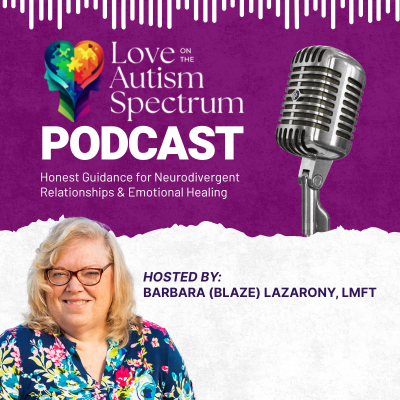
For more resources on improving communication in neurodiverse relationships, consider contacting me at Love on the Autism Spectrum. I offer therapy, counseling, and coaching for neurodiverse couples worldwide. I also provide compassionate and effective services tailored to the unique challenges faced by individuals on the autism spectrum, people with ADHD, Complex Trauma, and their partners.
Every couple will face its own unique set of challenges in every relationship. These challenges vary greatly, from communication difficulties to conflicting schedules or values. Understanding and supporting your neurodiverse partner is essential to fostering a fulfilling and resilient relationship.
However, with the right tools, strategies, and a commitment to understanding and supporting each other, every couple can navigate these challenges and discover unique solutions that work best for them. Through these shared experiences and growth, a relationship can thrive and deepen over time.
Frequently Asked Questions
What does it mean to be in a neurodiverse relationship?
A neurodiverse relationship involves partners who have different neurological differences, such as those labeled with Dyspraxia, Dyslexia, Attention Deficit Hyperactivity Disorder, Dyscalculia, Autistic Spectrum, OCD, Tourette Syndrome, and others. Each partner may have unique ways of thinking, learning, and processing information.
Why is clear and direct language important in neurodiverse relationships?
Clear and direct language minimizes confusion and misunderstanding. Neurodiverse individuals often prefer straightforward communication. Avoiding idioms, metaphors, and ambiguous phrases can help ensure that both partners are on the same page.
What can I do if I’m unsure what my partner is trying to communicate?
Open, honest communication is crucial, allowing for a deeper understanding and mutual respect for unique perspectives. By nurturing this level of understanding, you can build a stronger connection and cultivate a lasting bond based on trust and empathy.
Are there resources available to help improve communication in neurodiverse relationships?
Yes, there are numerous resources available. Companies like Love on the Autism Spectrum provide therapy, counseling, and coaching services tailored to the unique challenges faced by neurodiverse couples. You can also find online communities, books, and courses that improve communication in neurodiverse relationships.