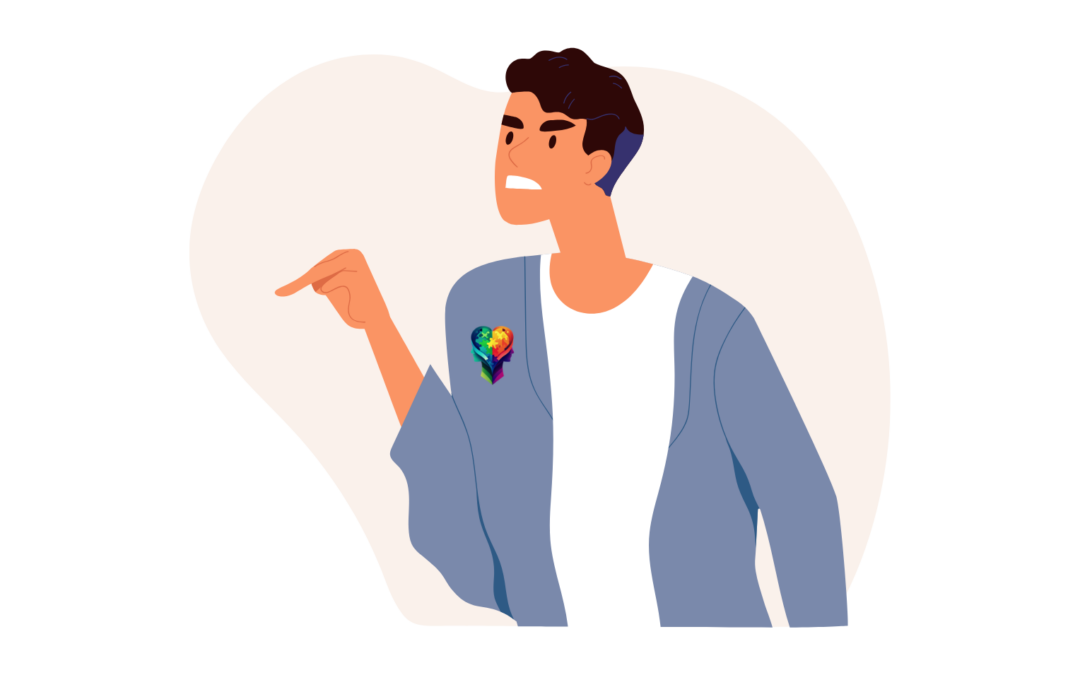
Anger is one of the most misunderstood emotions in relationships. For some, it feels explosive—like living with a ticking time bomb. For others, it remains hidden until it leaks out in shutdowns, withdrawal, or resentment. In neurodivergent partnerships, anger can be especially complicated because what one partner experiences as anger may be sensory overload, emotional flooding, or a nervous system reaction rather than hostility. Neurodiverse individuals, especially those on the autism spectrum, often face unique challenges in social and emotional situations, including identifying triggers, which can make anger and emotional regulation more complex.
Too often, anger gets mislabeled as dangerous or destructive. But anger itself is not the enemy. As research consistently shows, anger is a natural human emotion with essential functions: it signals injustice, protects boundaries, and mobilizes us to act. Understanding and managing anger is crucial for mental health and overall well-being in neurodiverse relationships. What matters most isn’t whether anger shows up—it’s how we understand it, express it, and respond to it in our partnerships.
In this blog post, we’ll explore the role of anger in neurodivergent partnerships, what research tells us about its function, and practical steps for moving from reactivity to repair. We’ll also discuss coping mechanisms tailored for neurodiverse individuals to support emotional regulation and improve quality of life.
3 Key Takeaways
- Anger is a natural, biologically wired emotion—not a character flaw. In neurodivergent relationships, it often reflects nervous system overload, not a lack of love.
- Research shows that anger, when expressed constructively, can strengthen intimacy by surfacing unmet needs and boundaries.
- Healing occurs when couples learn to distinguish between harmful expressions of anger (such as criticism, contempt, and abuse) and the deeper, underlying signals that anger conveys.
What Research Tells Us About Anger
Psychological research views anger as one of the core human emotions, with evolutionary roots in the protection and survival of individuals. Studies show that:
- Anger activates the sympathetic nervous system, resulting in increased heart rate, blood pressure, and adrenaline, which prepare the body for action (Novaco, 2016).
- Anger often arises from perceived injustice or boundary violations (Averill, 1983).
- Constructive anger expression can improve relationships when paired with problem-solving and emotional repair (Fitness & Fletcher, 1993).
- Destructive anger expression—characterized by criticism, contempt, or aggression—is predictive of relationship breakdown (Gottman, 1999).
Research also supports the use of emotion regulation and anger management strategies, such as cognitive restructuring, to address negative thoughts and improve outcomes for autistic individuals.
For neurodivergent partners, anger is often entangled with sensory sensitivity, executive dysfunction, or social misunderstandings. Autistic individuals, especially those with autism spectrum disorder, frequently experience communication difficulties that can contribute to anger and emotional distress. That means what looks like “too much anger” may actually be the nervous system shouting: “I’m overwhelmed!”
Anger in the Context of Neurodivergence
Autism and Anger
Autistic partners, including those with high-functioning autism, may experience anger in unique ways when sensory input is too intense, when routines are disrupted, or when communication breaks down. For an autistic person, anger outbursts can occur due to difficulty expressing or identifying their emotions. Specific triggers, such as bright lights, can lead to sensory overload and anger, making sensory integration therapy a valuable tool for managing these responses. What appears as an “outburst” is often an attempt to regulate a nervous system in distress. Sensory integration therapy, which may include deep pressure techniques, can help manage these responses. Interventions often focus on developing coping skills and new strategies for emotional regulation.
ADHD and Anger
For partners who live with ADHD, impulsivity can often lead to rapid and sometimes intense expressions of frustration. Emotional dysregulation, which is a fundamental characteristic of ADHD, means that feelings such as anger can escalate quickly and tend to fade just as fast. This heightened emotional volatility can pose challenges in maintaining steady and calm interactions within relationships, requiring patience and understanding from both partners.
Trauma and Anger
People who have experienced trauma in the past may react with intense anger when they are triggered. This anger often functions as a protective barrier, helping them to avoid feelings of vulnerability. It can mask underlying emotions such as fear, sadness, or shame, making it harder to address the root causes of their distress.
Shutdown vs. Explosion
Some neurodivergent individuals internalize anger, leading to shutdown or withdrawal rather than outward expression, and may struggle to identify or express their own emotions and feelings. Others externalize it, leading to visible frustration or heated words. Both are nervous system strategies—not personal attacks—and can lead to mutual understanding in a relationship.
Empathy is crucial for understanding the different anger responses that can occur in neurodiverse relationships.
A Client Story: The Anger That Wasn’t About Hate
Case Example: Julian and Maya (anonymized)
Julian, a 35-year-old autistic man, and his wife Maya came to therapy on the brink of separation. Maya described Julian’s outbursts as intolerable: “He yells about the smallest things—like me leaving the lights on. I feel like he hates me.” Family members and a neurotypical partner like Maya often struggle to understand and support their autistic loved one, mainly when communication styles and emotional triggers differ.
Julian, meanwhile, felt misunderstood. “It’s not about the lights,” he explained. “It’s that my brain feels like it’s on fire when things are chaotic. By the time I notice, I’m already shouting. I hate myself for it afterward.”
Through therapy, Julian learned to recognize his body’s early anger cues—tight chest, buzzing in his head—before the eruption. Maya learned to see his anger not as hatred, but as sensory distress. Together, they practiced time-outs, gentle check-ins, and rituals of repair after conflict. Over time, what once felt like destructive rage became an opportunity for understanding and recalibration. Mutual understanding and providing advance notice of changes helped Maya and Julian strengthen their relationship and better support each other.
The Functions of Anger
Anger serves important functions in relationships, especially when understood through a neurodivergent lens:
- Boundary Protection: Anger signals when something feels unsafe or disrespectful.
- Energy Mobilization: Anger can give momentum to address problems.
- Emotional Honesty: Anger often reveals deeper needs—connection, rest, respect.
Healthy anger expression, along with learning to express emotions effectively, supports emotional and overall well-being by reducing feelings of chronic stress and improving daily life.
When couples learn to interpret anger as a signal instead of a threat, they shift from cycles of blame to cycles of curiosity, which can help manage stress levels.
Gottman’s Perspective: Anger vs. Contempt
John Gottman’s research makes a critical distinction: anger itself is not destructive—contempt is. While anger says, “I care about this issue,” contempt says, “I don’t respect you.”
In fact, Gottman found that couples who argue—even passionately—can still maintain strong, lasting relationships, as long as they repair the damage afterward. It’s contempt, criticism, defensiveness, and stonewalling—not anger—that predict divorce. Using effective strategies for anger management can lead to significant improvements in relationship satisfaction.
This is liberating for neurodivergent couples. It means that experiencing anger doesn’t doom the relationship. What matters is whether partners can navigate anger through effective anger management without slipping into contempt or collapse.
David Richo on Healthy Anger vs. Abuse
Psychotherapist David Richo reminds us that anger itself is not only natural—it can be deeply relational when expressed with integrity. In his work, he distinguishes between healthy anger and abuse:
- Healthy anger is like a flare—it rises, signals what’s wrong, and then settles. It’s expressed respectfully, without shaming or threatening. It demands accountability and fosters dialogue. It coexists with love, maintaining connection even while naming a wound.
- Abuse is like a smoldering fire—it festers, blames, intimidates, or seeks revenge. It contaminates the present with past grievances, holds grudges, and breaks connections.
Teaching individuals social skills to navigate social situations is essential for developing healthy anger expression, especially for those with Asperger’s or autism. Tools like social stories can help individuals recognize triggers, understand appropriate responses, and practice expressing anger in constructive ways.
This distinction is crucial in neurodivergent partnerships because anger is often misinterpreted and misunderstood. A raised voice from sensory overload, for example, may still be a form of healthy anger if it’s followed by accountability and repair, along with an awareness of nonverbal cues. Abuse, by contrast, is about domination and harm.
When partners learn to practice healthy anger, something shifts. Instead of seeing anger as destructive, it becomes a pathway to greater intimacy. Richo describes healthy anger as part of an I-Thou relationship—one that respects the other as an equal human being, including understanding body language —even in conflict. Abuse, on the other hand, reduces the other to an object (I-It).
For couples navigating neurodivergence, this distinction can be life-giving. Healthy anger can actually move the relationship into a healthier space by:
- Naming unmet needs clearly.
- Setting respectful boundaries.
- Inviting repair and growth rather than fear.
Group therapy sessions and interpersonal effectiveness training can further support individuals in developing these skills, providing structured opportunities to practice emotional regulation and enhance social interactions.
Common Triggers of Anger in Neurodivergent Partnerships
- Sensory Overload: Noise, lights, or unexpected touch.
- Executive Dysfunction: Missed deadlines, forgotten tasks, or disorganization.
- Communication Misattunements: Different processing speeds or styles. Communication difficulties and negative thought patterns can also serve as triggers, making it more challenging to express needs or manage emotions.
- Unmet Emotional Needs: Feeling unseen, unheard, or dismissed.
- Accumulated Masking Fatigue: Suppressing one’s authentic self until the strain erupts.
High stress levels from sensory overload, social challenges, and masking can further increase vulnerability to these triggers. Using visual aids and alternative means of communication, such as writing or pictures, can help identify and manage triggers more effectively.
Steps to Navigate Anger Together
1. Redefine Anger as a Signal, Not a Sin
Instead of fearing anger, view it as a source of information. It’s normal to feel angry, and creating an environment where both partners feel safe to express anger is essential. Ask: What boundary, need, or stressor is anger pointing to?
2. Learn Nervous System Cues
Anger often builds in the body before it erupts. Monitoring stress levels and utilizing support systems can help recognize early signs of anger. Identify early signs—tight jaw, clenched fists, fast speech—and pause before escalation.
3. Build Pause-and-Repair Agreements
Agree on signals (like “time out”) that allow partners to step back when anger rises. Whenever possible, provide advance notice before taking a time out to help everyone prepare for the pause. If verbal discussion is difficult, consider using alternative means of communication, such as writing or texting, to express the need for a break. Follow up later with repair: an apology, explanation, or gentle reconnection.
4. Differentiate Anger from Contempt and Abuse
Anger: “I’m upset that the kitchen is messy.”
Contempt: “You’re lazy and useless.”
Abuse: “You’d better clean this up or else.”
Only the first can strengthen intimacy. The second erodes it, and the third destroys it.
5. Practice Co-Regulation
When one partner is angry, the other can help by grounding themselves—slowing breath, speaking calmly, reducing sensory input. Using deep pressure techniques, such as a weighted blanket or gentle massage, along with relaxation techniques, can also help calm the nervous system and support co-regulation.
6. Seek Professional Support
Chronic cycles of anger often need outside help. Working with a trained therapist who understands the unique needs of the neurodivergent individual and is connected to the autism community can provide tailored support and affirming therapy. A therapist trained in neurodiverse dynamics can untangle sensory overwhelm from relational wounds.
The Call to Connection
If anger has become a wedge in your relationship, know this: it doesn’t have to be the end. Anger can be a doorway to deeper intimacy when you understand its roots and respond with care.
If you and your partner are ready to move from reactivity to clarity, I invite you to book a FREE 20-minute “Clarity & Connection” Zoom session. Together, we’ll uncover the meaning beneath the anger and help you both feel safer, calmer, and more connected.
Final Thoughts: Anger Is a Messenger
Anger is not the problem. It’s the messenger. For neurodivergent couples, anger often signals overwhelm, unmet needs, or nervous system strain—not lack of love.
When we stop demonizing anger and start listening to it, we create space for transformation. Anger can point the way to boundaries that need to be honored, systems that need adjustment, and relationships that require new rhythms.
You are not broken for feeling angry. You are human, facing challenges. And when anger is met with compassion instead of fear, it becomes the beginning of healing, not the end.
Frequently Asked Questions
Is anger in neurodiverse relationships more common?
Not necessarily more common, but the autistic experience may appear differently. Neurodivergent partners often experience sensory overload or emotional flooding, which can trigger quicker expressions of frustration.
Can anger ever be healthy in a relationship?
Yes. Research shows that constructive anger—expressed with respect and followed by repair—can strengthen intimacy and trust. David Richo’s work reinforces that healthy anger can move a couple toward deeper authenticity, while abuse always tears the connection apart.
How can I tell if my partner’s anger is abusive?
Anger becomes abusive when it turns into threats, intimidation, or physical harm. Healthy anger communicates frustration about behavior, not contempt for the person. If you ever feel unsafe, prioritize your safety and seek outside help.
What if one partner never shows anger?
Suppressing anger isn’t healthier than expressing it in an explosive manner. Hidden anger often leaks out through passive-aggressiveness, shutdown, or resentment. Encouraging the safe and honest expression of anger is vital.